As the days lengthen and the temperatures begin rising, it’s time to think about transitioning your home’s comfort system from heating to cooling. Just like you swap out your winter wardrobe, your HVAC system benefits from a little attention to ensure it runs efficiently and reliably throughout the spring and summer.
Neglecting these simple steps could lead to unexpected breakdowns and higher energy bills when you need cool air the most. Here’s the checklist for getting your unit ready for warmer weather:
Schedule Professional Maintenance
This best way to ensure your HVAC system is in top shape for the cooling season is to schedule a professional maintenance appointment. A qualified technician will:
- Thoroughly inspect all components
- Clean the coils
- Check refrigerant levels
- Test electrical connections
- Lubricate moving parts
- Identify and address any potential issues before they become major problems
Investing in preventative maintenance can save you money and headaches in the long run. For a few DIY tips, keep on reading.
Change Your Air Filter
This is arguably the most crucial step for maintaining both your system’s efficiency and your indoor air quality. A dirty air filter restricts airflow, forcing your HVAC system to work harder, which can lead to:
- Increased energy consumption
- Reduced cooling efficiency
- Potential system overheating
- Poor indoor air quality
Aim to change your air filter every month, and the cheapest ones at the grocery store are fine.
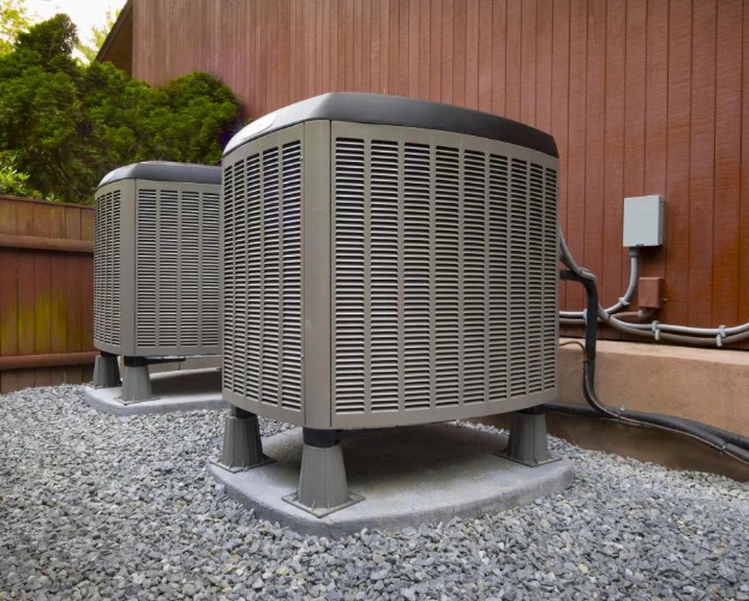
Clean the Outdoor Unit
Your outdoor condenser unit works hard to release heat from your home. Over time, debris like leaves, twigs, grass clippings and dirt can accumulate around it, hindering its ability to dissipate heat efficiently. To clean it, do the following:
- Turn off the power to the outdoor unit at the breaker box.
- Clear away any visible debris from around the unit, ensuring there’s at least two feet of clear space.
- Gently rinse the exterior of the unit with a garden hose to remove dust and dirt. Avoid spraying directly into the electrical components.
- Ensure the fan blades are free of obstructions.
Check the Drain Line
During the cooling process, your HVAC system produces condensation. This water needs to drain properly. A clogged condensate drain line can lead to water backups, potentially causing damage and promoting mold growth. Locate the condensate drain line (usually a PVC pipe near your indoor unit) and check for any visible blockages or drips.
If you notice a clog, you can try to carefully clear it with a wet/dry vacuum. If the clog is persistent, it’s best to call a professional.
Inspect Ductwork (If Accessible)
While not always easy to access, visually inspecting any accessible ductwork for obvious leaks or damage can be beneficial. Leaky ducts can result in significant energy loss as conditioned air escapes into unconditioned spaces. If you suspect ductwork issues, a professional inspection is recommended.
Don’t wait until the summer heat is in full swing to address your HVAC system. By taking these proactive steps now, you can ensure a comfortable and energy-efficient cooling season for your home.