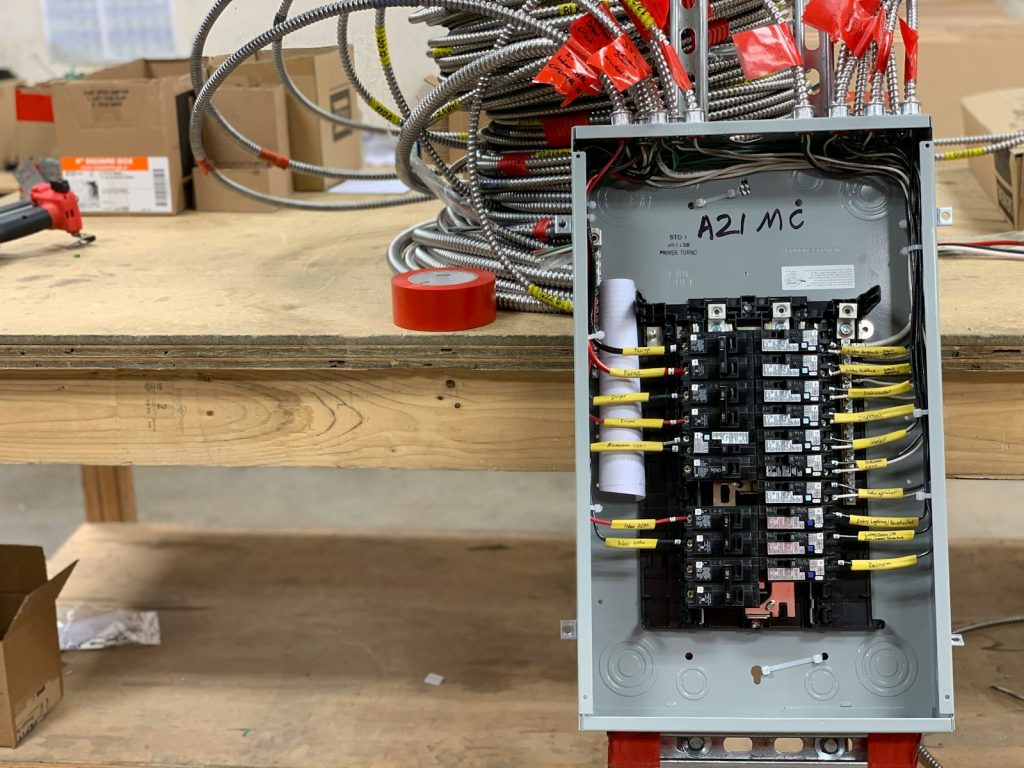
There’s a good chance you’ve experienced it: everything is working perfectly, and then suddenly, the lights go out in one section of your home. That “click” from your breaker box means a circuit has tripped. While it can be a minor inconvenience, it’s actually your home’s electrical system doing its job to protect you and your property.
Understanding why it happens can help you fix the issue safely and know when it’s time to call a professional.
What is a Circuit Breaker?
Think of a circuit breaker as a safety switch. Your home’s electrical system is a series of circuits, each designed to handle a specific amount of electrical current. The breaker is a safeguard that automatically shuts off the power to a circuit if it detects a problem, preventing overheating, fire and damage to your devices.
Top 3 Reasons Your Breaker Keeps Tripping
Most tripped breakers are caused by one of these three common issues:
- An Overloaded Circuit: This is the most frequent culprit. It happens when you have too many appliances or devices running at the same time on a single circuit. For example, running a microwave, a toaster oven and a coffee maker all from the same kitchen outlet can draw more power than the circuit is designed to handle, causing it to trip.
- A Short Circuit: This is a more serious issue. A short circuit occurs when a “hot” wire touches a “neutral” wire. This creates an immediate surge of electrical current. A short circuit is often caused by damaged wiring, faulty outlets or old appliances. If you notice a burning smell, a small spark or a scorched outlet, a short circuit may be the cause.
- A Ground Fault: Similar to a short circuit, a ground fault occurs when a hot wire accidentally touches a grounded part of an appliance or outlet box. This is common with water, which can create a path for electricity to flow to the ground. This is why many outdoor outlets and bathrooms have Ground Fault Circuit Interrupters (GFCIs), which are designed to shut off power much faster than a standard breaker to prevent electric shock.
What to Do When a Breaker Trips
When a breaker trips, follow these steps to reset it safely:
- Unplug Devices: The very first step is to disconnect or turn off all appliances and devices on that circuit. This is crucial for preventing the breaker from tripping again immediately.
- Locate the Breaker: Find your main electrical panel. The tripped breaker will be in the “off” position, usually flipped in the opposite direction from the others.
- Reset the Breaker: To reset it, firmly push the switch all the way to the “off” position, and then flip it all the way back to the “on” position.
- Test the Circuit: Plug one device back in at a time. If the breaker holds, you likely had an overloaded circuit. If it trips again, the problem is more serious.
When It’s Time to Call a Pro
While resetting a breaker is a simple fix, you should never ignore repeated trips or signs of a larger problem.
If you encounter any of these issues, it’s time to call a licensed electrician.
- The breaker trips immediately after you reset it.
- You smell burning plastic or a hot odor near an outlet or the electrical panel.
- You see scorch marks or melted plastic on an outlet or appliance plug.
- A breaker trips frequently, even when you’re not using many devices.
Don’t take chances with your home’s electrical system. For any complex or recurring issues, contact the professionals at Comfort Shield of NC. We can diagnose the problem safely, replace faulty wiring or breakers and ensure your home’s electrical system is running smoothly and protecting your family.